Explore the best residential solar websites and learn how design, trust, and CRM integration convert solar interest into signed installs.
Sunlight hits rooftops every day, but only the best websites turn that light into signed solar contracts. Residential solar installation has become one of the fastest growing segments in home services, driven by rising utility costs, grid instability, and increasing homeowner interest in energy independence. Millions of homes now have rooftop solar, and the average residential installation routinely lands between $18,000 and $35,000 before incentives, depending on system size, battery storage, roof complexity, and local permitting. With ticket sizes this high, every website visit represents a meaningful revenue opportunity.
Solar buyers are informed and cautious. They research financing options, warranties, equipment brands, installation timelines, and long term savings before ever speaking with a sales representative. Most homeowners compare multiple installers and often spend weeks or months reviewing information. A poorly designed website introduces doubt and slows momentum, while a polished, transparent experience builds confidence and shortens the sales cycle. In residential solar, trust is currency, and trust is built online.
A great looking website matters more in solar than in many other trades because the product is both technical and financial. Homeowners need education without confusion and reassurance without pressure. The strongest residential solar websites balance clarity with aspiration, combining clean design, strong visuals, and structured explanations that make complex topics feel approachable. When executed properly, the website becomes the first and most influential sales conversation.
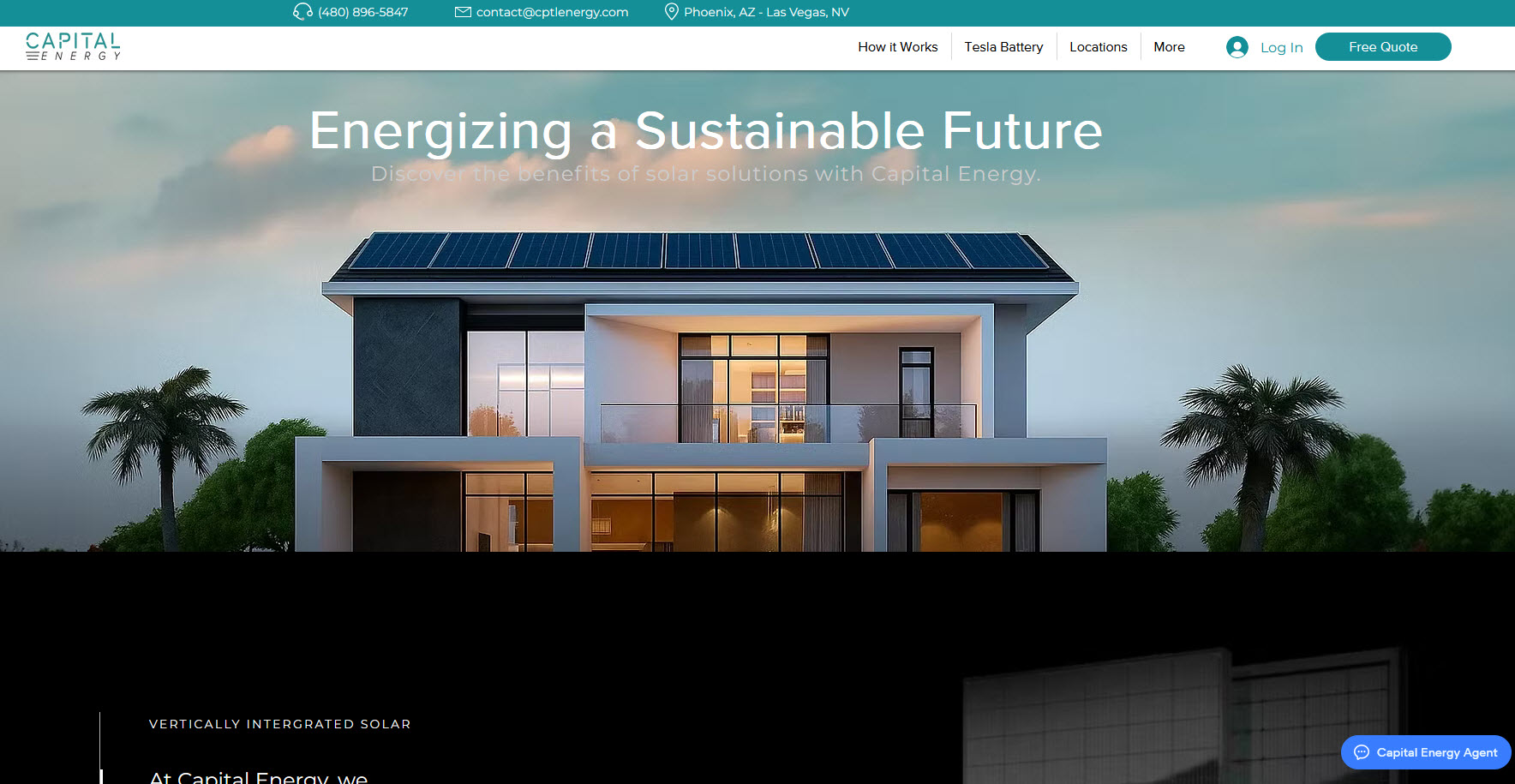
CPTL Energy delivers a clean, conversion focused solar company website that speaks directly to modern solar buyers. The homepage immediately establishes professionalism through refined design, strong visual hierarchy, and a clear value proposition centered on energy savings and reliability. Calls to action are thoughtfully placed and framed as consultations rather than hard sales, which aligns perfectly with the research driven mindset of solar homeowners. The layout guides visitors naturally from education to inquiry, using whitespace, iconography, and concise copy to reduce cognitive load. Conversion optimization is evident in the streamlined forms, prominent trust signals, and logical page flow that encourages engagement without overwhelming the visitor.
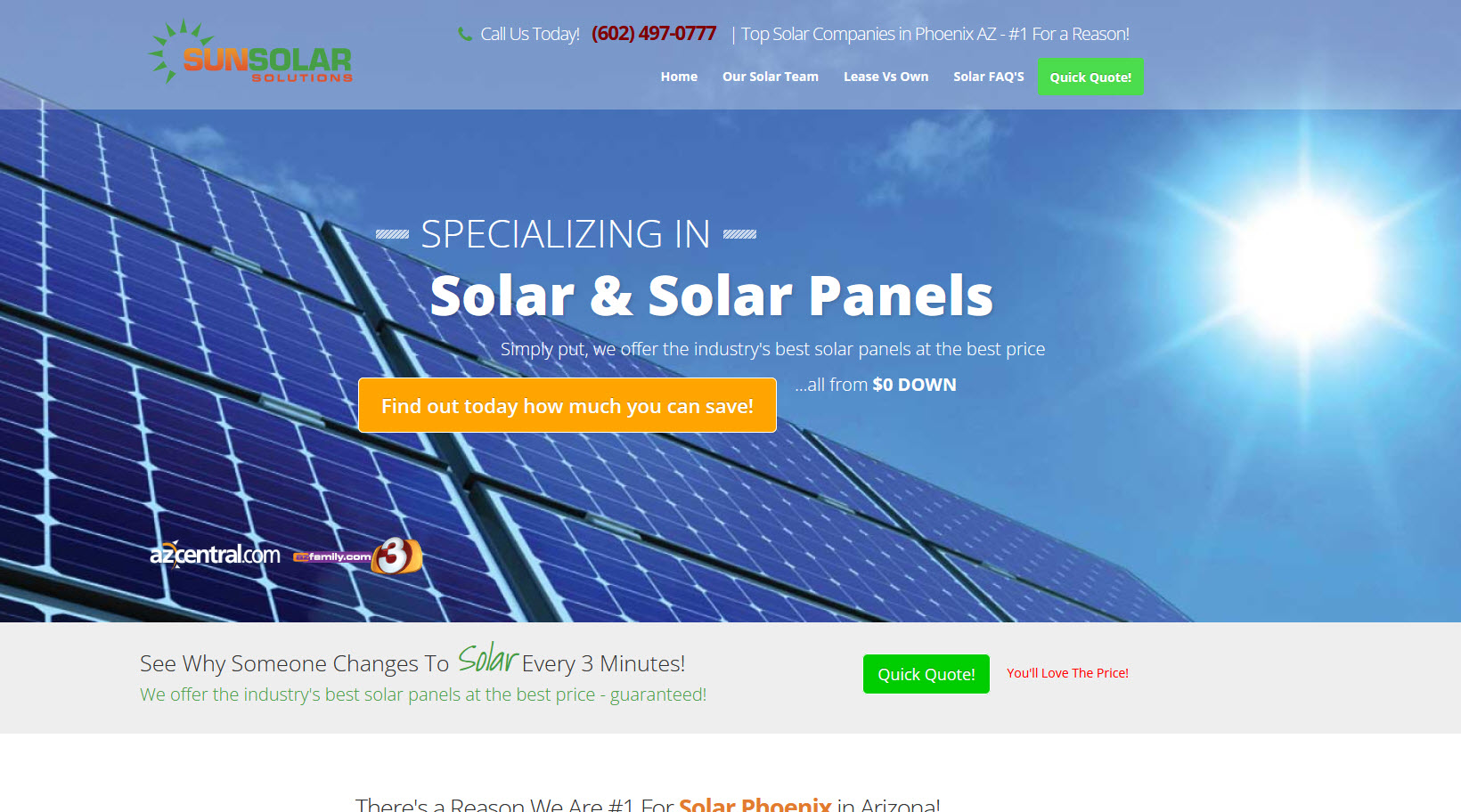
Solar Solutions showcases how premium branding elevates perceived value in residential solar. The website blends strong lifestyle imagery with technical credibility, positioning the company as both innovative and dependable. Navigation is intuitive, educational content is broken into digestible sections, and the site excels at explaining long term value without relying on aggressive sales tactics. The result is a polished experience that builds confidence quickly.
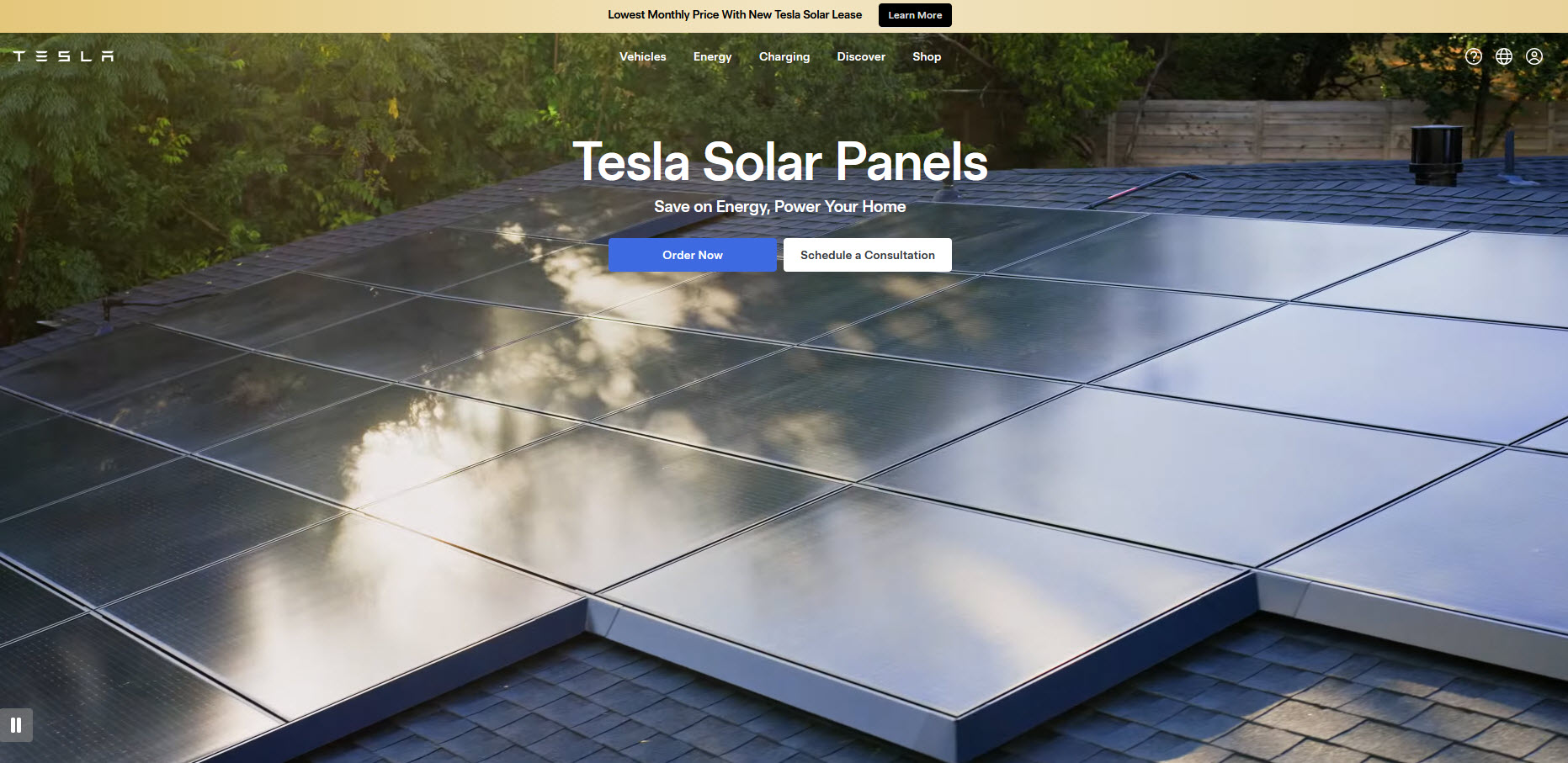
Tesla Solar uses minimalism and brand recognition to its advantage. The website emphasizes simplicity, clean visuals, and direct language, making complex solar and battery concepts feel accessible. Pricing pathways are clear, and the user journey is intentionally short, appealing to homeowners who value efficiency and clarity.
Momentum Solar balances bold branding with approachable messaging. The website uses strong contrast, engaging visuals, and structured content to walk visitors through the solar journey. Trust signals, testimonials, and financing explanations are woven naturally into the experience.
Vivint Solar focuses heavily on education and reassurance. The site explains system performance, monitoring, and long term benefits in plain language. Visual consistency and a friendly tone help reduce anxiety around installation and ongoing maintenance.
Sunnova positions itself as a long term energy partner rather than just an installer. The website emphasizes service plans, protection, and customer support, which resonates with homeowners concerned about post installation reliability. The design supports this message with calm visuals and structured layouts.
Freedom Solar Power uses credibility and experience as core messaging pillars. The website highlights certifications, warranties, and project history while maintaining a modern look. Clear calls to action and informative content support confident decision making.
Palmetto Solar stands out for its transparent and consumer friendly approach. The website educates homeowners about system ownership, monitoring, and maintenance while maintaining a clean and approachable design that encourages trust.
Residential solar websites must establish trust within seconds. Homeowners are wary of misleading promises and unclear savings claims, so credibility must be front and center. This includes professional design, consistent branding, clear messaging, and visible indicators of legitimacy such as experience, warranties, and service guarantees. A trustworthy appearance reduces skepticism and increases time on site.
When trust is established early, visitors are more receptive to education and more willing to engage with consultation requests.
Solar buyers want honest answers. A great website communicates value by explaining how solar fits into the homeowner’s energy goals rather than pushing exaggerated savings claims. Clear explanations of system sizing, energy offset, and long term benefits build credibility. Visual aids such as diagrams and simplified charts help translate technical concepts into practical understanding.
Clear value communication helps qualify leads and reduces friction during sales conversations.
Residential solar involves financing models, net metering, incentives, and equipment options. Strong websites break these topics into manageable sections using plain language and visual structure. Educational content should feel empowering rather than overwhelming, allowing homeowners to progress at their own pace.
Education builds confidence, and confident homeowners convert at higher rates.
Calls to action in solar websites should respect the decision making process. Rather than pushing immediate commitments, effective CTAs invite visitors to request assessments, savings estimates, or consultations. Placement matters, and CTAs should appear at natural transition points within the content.
This approach improves lead quality and aligns expectations from the first interaction.
Clean layouts, modern typography, and thoughtful imagery reinforce the idea that solar is a forward looking investment. Websites that look outdated undermine the perception of technological competence. Visual consistency across pages creates a seamless experience that supports brand authority.
Strong visuals help homeowners imagine solar as part of their lifestyle rather than just a utility upgrade.
Many homeowners explore solar options on mobile devices during downtime. A residential solar website must perform flawlessly across screen sizes, with fast load times and responsive layouts. Slow or broken mobile experiences create friction and reduce trust.
Mobile optimization ensures that curiosity turns into engagement instead of abandonment.
Financing is a major consideration in residential solar. Websites should clearly explain ownership models, payment structures, and long term implications without jargon. Transparency builds confidence and filters out unqualified leads early in the process.
When financing is clearly explained, sales conversations become more productive and efficient.
Integrating the website directly with a CRM ensures that every inquiry is captured and acted on quickly. Solar leads are time sensitive, and delayed follow up often results in lost opportunities. CRM integration allows automatic lead assignment, follow up scheduling, and status tracking.
This seamless flow improves response times and ensures consistent communication across the sales team.
CRM integration also provides insight into which pages, campaigns, and messages generate the highest quality leads. Builders can refine content and advertising strategies based on real performance data rather than assumptions. Over time, this leads to lower acquisition costs and higher close rates.
Data driven decision making strengthens both marketing and sales alignment.
Solar buying cycles can be long. Automated nurture sequences through CRM integration allow installers to stay top of mind with educational content, updates, and reminders. This ongoing engagement builds familiarity and trust without manual effort.
Consistent follow up increases conversion likelihood when homeowners are ready to move forward.
Testimonials, reviews, and case studies help homeowners visualize success. The most effective websites integrate social proof near decision points, reinforcing confidence at moments of hesitation. Authentic stories resonate more than generic praise.
Social proof validates decisions and reduces perceived risk.
According to Lynn Jurich of Sunrun, “Homeowners want clarity and honesty above all else when it comes to solar. The companies that earn trust early are the ones that win long term relationships.” That insight highlights why transparency and education are foundational to strong digital experiences.
Barry Cinnamon of Cinnamon Energy Systems has also noted that “Solar adoption accelerates when people understand not just the savings, but the reliability and longevity of the system.” This reinforces the importance of explaining performance and durability clearly on solar websites.
Expert perspectives underscore why thoughtful website design directly impacts adoption.
The best residential solar websites succeed because they respect the homeowner’s journey. They inspire confidence through clean design, educate without overwhelming, and guide visitors toward meaningful conversations rather than rushed commitments. By combining strong visuals, structured education, transparent messaging, and seamless CRM integration, these websites turn interest into action and action into installations.
As residential solar continues to grow and competition increases, the digital experience will often determine which installer earns trust first. If your website is the beginning of a homeowner’s energy transformation, does it reflect the clarity and confidence you want associated with your brand?

